Spec Battle: Msi Cubi Nuc 1M vs Samsung Galaxy Chromebook 2 360 — Is It Worth Upgrading?
When shoppers weigh a compact mini PC against a convertible Chromebook, the decision rarely comes down to a single metric. The Msi Cubi Nuc 1M represents the small-form-factor desktop approach — a highly configurable, upgrade-friendly box intended for flexible use — while the Samsung Galaxy Chromebook 2 360 is a thin, battery-powered convertible designed around Chrome OS and mobility. This article unpacks the hardware and real-world tradeoffs buyers typically care about: performance for work and media, expandability, portability, battery life, software ecosystem, and price-to-value. It then provides practical guidance on who should upgrade, and when it’s better to stick with what one already owns.
Introduction: Two Different Solutions to the Same Problems
At first glance these devices target different buyer needs. The MSI Cubi line is built for flexibility — living-room media centers, lightweight desktop replacements in constrained spaces, or base systems for light office tasks. It typically appeals to users who prioritize upgradability, a variety of ports, and the ability to run full Windows or Linux workloads.
The Samsung Galaxy Chromebook 2 360, by contrast, is a consumer-focused convertible that emphasizes portability, a bright display, a touchscreen with a 360-degree hinge, and the simplicity and speed of Chrome OS. It’s aimed at students, travelers, and those who want a lightweight, always-ready device for web-first workflows.
Detailed Product Analysis
Msi Cubi Nuc 1M — compact desktop versatility
The MSI Cubi family (including compact NUC-style models) is notable for packing desktop-class connectivity and upgrade possibilities into a tiny chassis. Typical selling points include support for user-replaceable RAM and storage, a selection of modern I/O (USB-A, USB-C, HDMI, DisplayPort or miniDP), and options for mounting behind a monitor or TV.
Real-world strengths:
- Upgradeability: Many Cubi models allow RAM and storage upgrades, which extends usable life and makes them easier to adapt as needs change.
- Ports and connectivity: A broad port selection means fewer dongles and easier multi-monitor setups — useful for home offices and digital signage.
- Operating system flexibility: Runs Windows or Linux, so it supports legacy desktop apps, local development environments, and more complex workflows than Chrome OS permits.
- Quiet, low-power operation: Designed for continuous use as media hubs or thin clients without the bulk of a full desktop tower.
Limitations to be aware of:
- There is no built-in battery — not a mobile device.
- Thermals and raw CPU performance are constrained by the tiny chassis; sustained heavy workloads will throttle compared to larger desktops or laptops.
- Integrated graphics limit gaming and GPU-accelerated workloads.
Samsung Galaxy Chromebook 2 360 — mobile productivity with a convertible edge
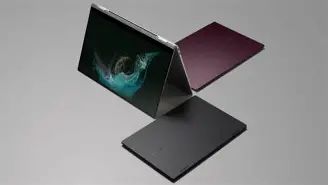
The Galaxy Chromebook 2 360 is a mainstream convertible Chromebook that emphasizes portability and a modern display. It is designed around Chrome OS, which provides fast startup, automatic updates, and a growing Progressive Web App (PWA) and Android app ecosystem. Typical models favor a balance between performance and battery life, with touchscreen support and a flexible hinge for tent and tablet modes.
Real-world strengths:
- Portability and battery life: As a laptop with integrated battery, it’s built for all-day use on campus or in coffee shops.
- Touch and pen support: The 360-degree hinge and touchscreen make it ideal for light creative work, note-taking, and media consumption.
- Simple, secure OS: Chrome OS is low-maintenance, typically booting quickly and handling app updates automatically.
- Display and form factor: A high-quality display and slim chassis create a premium user experience for reading, web browsing, and streaming.
Limitations to be aware of:
Discover deals on Laptops & Computers — updated daily.
Browse Now →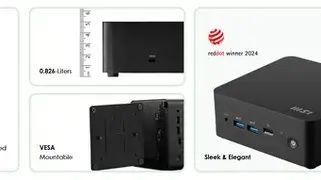
- OS constraints: Chrome OS is web-first and not a full desktop OS; specialized desktop applications may not be available or may require workarounds.
- Limited upgradeability: Memory and sometimes storage are soldered or difficult to upgrade.
- Performance ceilings: For heavy multitasking, professional media editing, or local virtualization, a more powerful laptop or desktop is better.
Specifications Snapshot: What Buyers Usually Compare
| Category | Msi Cubi Nuc 1M (typical) | Samsung Galaxy Chromebook 2 360 (typical) |
|---|---|---|
| Form factor | Mini PC (no battery), VESA-mountable small chassis | 13–14" convertible laptop with 360° hinge |
| Operating system | Windows or Linux (user choice) | Chrome OS |
| CPU | Low-power Intel U- or similar mobile/desktop CPUs; configurable across models | Energy-efficient Intel Core U-series or similar mobile CPUs |
| RAM | User-upgradeable (often DDR4 SO-DIMM) | Typically soldered, up to moderate capacity (e.g., 8 GB common) |
| Storage | M.2 SSD or SATA bay options, user-replaceable | NVMe SSD in some SKUs; lower-end models may use eMMC |
| Graphics | Integrated GPU (Intel), suitable for 4K video playback and light GPU tasks | Integrated GPU (Intel), tuned for power efficiency and display rendering |
| Display | Depends on connected monitor — supports multiple external displays | Built-in touchscreen, convertible modes, good color and brightness for content |
| Ports | Multiple USB-A, USB-C, HDMI/DP, Ethernet on some SKUs | Typically 1–2 USB-C, 1 USB-A, headphone jack; fewer ports than a mini PC |
| Battery | None | Integrated battery for several hours of mobile use |
| Upgradeability | High — RAM and storage often upgradeable | Low — limited RAM upgrades, storage sometimes user-replaceable on specific models |
| Primary use cases | Home office, media server, signage, light desktop work | Students, travel, content consumption, light productivity |
Pros & Cons
Msi Cubi Nuc 1M — Pros
- Flexible OS choice (Windows/Linux) for a wide range of applications
- Superior upgradeability for RAM and storage compared with most laptops
- Abundant I/O and multi-monitor support for desktop setups
- Quiet, low-profile operation and easy mounting options
Msi Cubi Nuc 1M — Cons
- No battery — not suited for mobile use
- Limited CPU/GPU headroom for sustained heavy workloads
- Requires external monitor, keyboard and mouse adding to total cost
Samsung Galaxy Chromebook 2 360 — Pros
- Portable and lightweight with an all-day design for mobile productivity
- Touchscreen and convertible modes add versatility for note-taking and presentations
- Chrome OS simplicity: fast boot, automatic updates, and tight Google integration
- Built-in display and integrated battery reduce need for extras
Samsung Galaxy Chromebook 2 360 — Cons
- Chrome OS is limited for users who require full desktop applications
- Limited upgradeability — RAM and sometimes storage are locked
- Port selection is typically smaller, which can complicate multi-peripheral setups
Real-World Use Cases
Home office worker
For someone working from a fixed desk who uses Office apps, web conferencing, and occasional local software, the choice hinges on workflow. The Cubi Nuc provides a stable, upgradeable base that connects to a larger monitor, full-sized keyboard, and webcam — ideal for extended productivity. The Galaxy Chromebook 2 360, however, is attractive for anyone who values mobility and a ready-to-go laptop for meetings in different rooms or campus environments. If the work is heavily web-based and relies on Google Workspace, the Chromebook will feel snappier day-to-day.
Student or traveler
A student who attends classes, takes notes, and streams media will typically prefer the Galaxy Chromebook 2 360. The touchscreen and pen support (where available), combined with a convertible hinge, make it convenient for lectures and reading. Battery life and light weight are decisive here; a mini PC like the Cubi makes sense only if the user needs a dedicated dorm-room desktop setup and doesn’t need mobility.
Media center or digital signage
The MSI Cubi Nuc shines as a media hub connected to a TV or as a compact digital signage player. Its ability to drive multiple external displays, support for hardware video decoding, and quiet operation make it a practical choice for living-room PC use or appliance-like roles.
Developer / power user
Developers who need native Linux environments, containerization, or local servers will appreciate the Cubi’s ability to run full desktop OSes and the ease of upgrading RAM and storage. Chromebooks can run Linux containers via Crostini, but the experience is more constrained and dependent on hardware support and available resources.
Buying Guide: How to Choose Based on Needs
Prioritize portability and battery life
If the day routinely involves commuting, working in cafés, or moving between rooms, the Galaxy Chromebook 2 360 is the better default. Look for a configuration with the best balance of RAM (8 GB is a practical minimum in 2026) and SSD capacity you can afford. Prioritize battery tests and real-world reviews for accurate stamina expectations.
Prioritize upgradeability and ports
For a reliable, long-lived desktop replacement that can evolve, the MSI Cubi Nuc 1M wins. Pay attention to the exact SKU’s support for RAM and storage upgrades, the available port selection (USB-C with DisplayPort alt mode, HDMI/DP, Ethernet), and whether the model supports VESA mounting if intended for hidden installations.
Decide on OS and software needs
Assess the software stack. If essential applications are Windows-only (specialized accounting, professional media suites, or niche enterprise tools), a Cubi running Windows is the practical choice. If the workflow is primarily browser-based, or relies on Android apps or PWAs, the Galaxy Chromebook 2 360 will offer a streamlined, low-maintenance experience.
Consider peripherals and total cost
A mini PC purchase often requires a separate monitor, keyboard, and mouse, which raises the initial outlay. Factor those into the budget. Conversely, Chromebooks are all-in-one devices but may need a USB-C dock or dongles for certain peripherals; buyers should verify port requirements before committing.
Find top-rated Laptops & Computers products at great prices.
View Offers →Look for real-world benchmarks and battery tests
Spec sheets only reveal part of the story. Seek recent reviews or test results that show sustained CPU performance (to understand thermal throttling), display color accuracy (if content creation matters), and battery runtimes under typical workloads (web browsing, video playback, productivity apps).
Upgrade Considerations and Longevity
Longevity depends on upgradeability and software support. The MSI Cubi’s advantage is clear: replaceable RAM and storage plus the ability to run different operating systems mean it can remain useful for many years. Chromebooks, while receiving regular OS updates for a guaranteed period, can be limited by fixed hardware. Buyers who want a device that can be refreshed incrementally should choose the Cubi; those who prefer a low-maintenance, secure platform updated by the vendor may prefer the Chromebook.
Price-to-Value and When to Upgrade
An upgrade is worth it when the new hardware addresses concrete pain points: insufficient ports, poor battery life, lack of upgrade paths, or an OS that no longer supports required apps. If the current device meets daily needs — launches apps quickly, maintains acceptable battery life, and supports required peripherals — upgrading primarily for marginal spec improvements is often not cost-effective.
For users sitting on an older laptop that struggles with modern web multitasking, the Galaxy Chromebook 2 360 can feel like a meaningful upgrade because of responsiveness, battery life, and the portability gains. For users with a desktop setup that lacks a compact footprint or who need additional I/O and upgradeability, replacing an aging tower with an MSI Cubi Nuc 1M can reduce noise, footprint, and energy usage while maintaining the flexibility of a full desktop OS.
Final Thoughts and Conclusion
The MSI Cubi Nuc 1M and Samsung Galaxy Chromebook 2 360 occupy different points on the device spectrum. The Cubi is a small-but-expandable desktop solution: ideal for those who want the flexibility to upgrade, run full desktop operating systems, and attach multiple peripherals or displays. The Galaxy Chromebook 2 360 is a polished, portable convertible that excels for web-first productivity, content consumption, and note-taking on the go.
Is it worth upgrading? The answer depends on the user’s priorities. Choose the Cubi if upgradeability, port density, and the ability to run desktop-class software matter most. Choose the Galaxy Chromebook 2 360 if mobility, touchscreen interaction, and a lightweight, low-maintenance OS are the priorities. In mixed households or small offices, both devices can complement each other: the Cubi as a stable in-home workstation or media server, and the Chromebook as the grab-and-go device for classes, travel, and casual work.
Ultimately, an upgrade becomes worthwhile when it removes a daily friction point — cramped ports, sluggish boot times, poor battery life, or an OS that no longer supports essential applications. Buyers should match the device’s strengths to their real-world workflows rather than chasing raw headline specs alone.