Difference Between Gmktec Nucbox G10 Mini Pc and Even Realities G1 Smart Glasses Explained
Introduction
Mini PCs and wearable smart displays belong to two very different families of consumer computing. The Gmktec Nucbox G10 Mini PC represents a compact, desk-centric approach to desktop computing — a small box that replaces or supplements a traditional tower. The Even Realities G1 Smart Glasses represent an increasingly mature class of wearable displays that bring large-screen experiences and context-aware overlays directly into the user's field of view. Both aim to make computing less obtrusive, but they solve different problems.
This article provides a detailed comparison and practical analysis of these two devices, focusing on how they differ across design, performance, connectivity, real-world use cases, and purchasing considerations. The goal is to help buyers understand which device fits their needs, whether they want a discrete desktop replacement, a portable media workstation, or a wearable display for productivity and immersive content.
Product overviews
Gmktec Nucbox G10 Mini PC — what it is
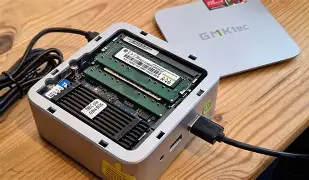
The Gmktec Nucbox G10 is a small-form-factor desktop designed for users who want the functionality of a full PC in a compact enclosure. Mini PCs like the Nucbox aim to balance performance, connectivity, and thermal control in a chassis that can sit behind a monitor, under a TV, or on a desk without demanding much space. They are typically used for home offices, media centers, light content creation, and point-of-sale or kiosk applications.
Even Realities G1 Smart Glasses — what they are
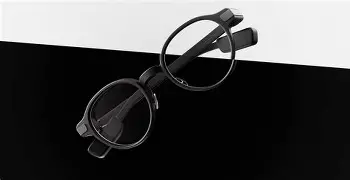
The Even Realities G1 Smart Glasses are an example of modern wearable displays that combine a lightweight frame with microdisplays and sensors to deliver augmented or virtual viewing experiences. Smart glasses are designed for hands-free viewing, presenting virtual screens or overlays while the wearer remains aware of their surroundings. Typical uses include media consumption, mobile productivity, remote assistance, training, and certain field-work scenarios where heads-up information is valuable.
Detailed analysis: core differences
Design and form factor
The most obvious difference is physical: the Nucbox G10 is a box-shaped desktop device that requires external peripherals (display, keyboard, mouse), while the G1 Smart Glasses are a wearable intended to keep the display with the user. The Nucbox prioritizes internal components, cooling, and I/O ports; the G1 prioritizes weight distribution, comfort, display optics, and battery integration.
Performance and computing model
The Nucbox G10 follows a traditional PC model: it houses a general-purpose CPU (and sometimes integrated or discrete GPU options), RAM, storage, and runs a desktop operating system. That makes it suitable for multitasking, productivity suites, web browsing, light video editing, and local virtualization in many configurations.
Smart glasses like the G1 generally do not aim to be standalone desktop replacements. They either connect to a host device (phone, mini PC, or streaming stick) or include a compact SoC for on-device tasks (media playback, basic AR overlays). Even when a glasses unit has internal processing, its thermal and power budgets are far smaller than a mini PC's, so the tasks it handles are lighter and optimized for low power.
Displays and visual experience
The Nucbox outputs to conventional monitors or TVs; display quality depends on the monitor used (resolution, color accuracy, refresh rate). Buyers can pair a high-resolution monitor for detailed work, dual-monitor setups for multitasking, or a TV for media playback.
The G1 Smart Glasses create a virtual display perceived close to the eyes. Key considerations for smart glasses are field of view (FOV), image clarity, color reproduction, latency, and whether the optics cause eye strain during prolonged use. Smart glasses can give the impression of a very large screen in a portable form factor, which is their primary attraction for watch-anywhere media and private viewing.
Connectivity and ports
Mini PCs such as the Nucbox G10 typically provide a broad range of ports: multiple USB-A/USB-C, HDMI/DisplayPort, Ethernet, and audio jacks, plus Wi‑Fi and Bluetooth. This makes them flexible for wired networks, multiple displays, local peripherals, and external storage.
Discover deals on Laptops & Computers — updated daily.
Browse Now →Smart glasses rely on wireless protocols (Bluetooth, Wi‑Fi) or a single wired port (USB-C) to connect to content sources. When paired with a mini PC, a glasses wearer often uses a USB-C video or a wireless streaming method. The simplicity of connections for glasses limits the direct peripheral support compared with a mini PC.
Battery life and power model
The Nucbox is typically mains-powered with no battery, offering continuous performance as long as it is plugged in. This suits stationary desk setups and media centers where uptime matters over portability.
The G1 Smart Glasses are battery-powered and built for mobility. Battery life varies by usage (video playback, AR overlays, or pass-through camera use). Buyers must weigh comfort and battery replacement/recharging cycles against the portability advantage.
Software, ecosystems, and usability
The Nucbox runs full desktop OSes (Windows or Linux are common), offering access to traditional productivity applications, browser-based tools, development environments, and local storage. This aligns with users who need a conventional computing environment in a compact package.
Smart glasses rely heavily on an ecosystem of apps optimized for narrow use cases — media players, companion apps, developer SDKs for AR overlays, and remote-assistance platforms. The glasses' usability is tied to the maturity of their app ecosystem and compatibility with common workflows (document viewing, conferencing, screen-casting).
Noise, cooling, and maintenance
Mini PCs must manage heat. Some Nucbox-style units are passively cooled (fanless) for silent operation but may throttle under sustained load. Others use small fans that create audible noise under heavy workloads. Maintenance usually consists of occasional cleaning and software updates.
Smart glasses avoid traditional fans; thermal design focuses on efficient components and heat spread. Because they sit close to the head, thermal comfort and safe temperatures are crucial. Maintenance for glasses relates to lens cleaning, firmware updates, and battery health management.
Pros & cons
Gmktec Nucbox G10 Mini PC
- Pros: Compact footprint suitable for small desks and media centers; flexible I/O for multiple peripherals and displays; runs standard desktop OSes; continuous, mains-powered performance; easy to integrate into home office setups.
- Cons: Not inherently portable without an external monitor; potential fan noise or thermal throttling in constrained workloads; limited internal expandability compared with tower PCs; depends on user to provide display and peripherals.
Even Realities G1 Smart Glasses
- Pros: Highly portable, hands-free viewing with an immersive virtual screen; ideal for private media consumption and heads-up information; can pair with phones and compact hosts for a lightweight mobile workflow; reduces dependence on physical displays.
- Cons: Limited processing power compared with desktop-class systems; shorter battery life under heavy use; optics can cause discomfort for long sessions for some users; relies on a mature app ecosystem and compatible host devices for full functionality.
Comparison table
| Feature | Gmktec Nucbox G10 Mini PC | Even Realities G1 Smart Glasses |
|---|---|---|
| Primary role | Compact desktop replacement / media center | Wearable display for media, AR overlays, and mobile productivity |
| Form factor | Small box, needs external display and peripherals | Glasses frame with integrated displays and battery |
| Performance model | General-purpose CPU, configurable RAM/storage, desktop OS | SoC or tethered processing; optimized for low-power tasks |
| Display | Depends on connected monitor(s) — user chooses resolution/quality | Near-eye microdisplay(s); limited FOV but portable large-screen feel |
| Connectivity | Multiple USB, HDMI/DP, Ethernet, Wi‑Fi, Bluetooth | USB-C, Bluetooth, Wi‑Fi; primarily wireless or single-cable tethering |
| Power | Mains-powered (continuous) | Battery-powered (rechargeable), limited runtime |
| Best for | Home office, HTPC, light content creation, point-of-sale, lab use | Travel media, private viewing, remote assistance, lightweight AR tasks |
| Noise | May have fans or be fanless depending on configuration | Silent (no fans), thermal managed passively |
| Upgradeability | Limited but possible (RAM, storage in many models) | Minimal; mostly firmware updates and accessory swaps |
Real-world use cases and buyer priorities
Understanding what buyers typically care about clarifies which product matches which lifestyle. Here are common scenarios:
Home office worker who wants a clean desk
Such a buyer values a reliable desktop experience without the bulk of a tower. The Nucbox G10 shines here: it provides the speed and software compatibility of a full PC while minimizing desk clutter. Buyers care most about CPU performance for productivity apps, having enough RAM for browser-heavy workflows, and quiet operation so meetings aren’t disturbed.
Looking for the best Laptops & Computers deals on Amazon?
See Deals →Media consumer who wants portability
Someone who travels frequently and wants to watch shows on a plane or in a hotel room might prefer the G1 Smart Glasses. The glasses create a private theater without carrying a large laptop or monitor. The buyer’s key concerns are battery life, visual comfort, and how well the glasses pair with phones or portable hosts.
Field technician or remote-assistance user
For on-site workers who need hands-free access to schematics or live support, smart glasses are compelling. They let technicians keep hands on tools while viewing step-by-step instructions. Buyers here prioritize stable wireless connectivity, low latency for video calls, and secure, enterprise-capable software integrations.
Light content creator or streamer
A creator who wants to record or stream gameplay, tutorials, or host a portable editing station will lean toward a mini PC. The Nucbox can be part of a compact streaming rig when paired with capture devices, a camera, and a microphone. Buyers care about CPU and GPU capability, thermal performance, and ports for cameras and storage.
Buying guide: what to check before choosing
Both product classes require attention to different details. Below are practical checkpoints for prospective buyers.
When choosing a Nucbox G10 Mini PC
- Performance needs: Identify primary tasks. Web browsing and office apps are satisfied by entry-level CPUs and 8–16GB RAM. For video editing or heavier multitasking, opt for higher-tier CPUs and 16–32GB RAM.
- Storage: Prefer an SSD for responsiveness. Check whether there is room for a secondary drive if future expansion is important.
- Ports: Ensure enough display outputs for the intended monitor setup and look for USB-C with alternate mode if mobile device compatibility matters.
- Cooling/noise: If silence is important, verify whether the unit is fanless or has low-noise fans and read reviews regarding thermal throttling.
- Operating system: Confirm OS options and driver support, especially for Linux users.
- Warranty and support: Check warranty period and availability of regional support.
When choosing Even Realities G1 Smart Glasses
- Comfort and fit: Try to test for weight, pressure on the nose and ears, and the ability to wear them with prescription glasses if needed.
- Display quality: Assess perceived resolution, contrast, and whether the optics introduce latency or artifacts during fast motion.
- Battery life: Consider typical runtime for streamed video versus AR overlay use and whether external battery packs are supported.
- Compatibility: Confirm which phones, tablets, or PCs the glasses support and whether required adapters or apps are available.
- Software ecosystem: Look for useful native apps or third-party integrations that match intended workflows (e.g., conferencing, remote assistance, media players).
- Privacy and safety: Clarify how the device handles camera feeds and sensitive data, and whether it meets workplace security policies if used professionally.
How they can complement each other
Although different, the two devices can complement each other. A Nucbox G10 can act as a compact host for productivity tasks and media libraries, while the G1 Smart Glasses can serve as a personal display for content streamed from the Nucbox. For remote workers or frequent travelers, combining a mini PC at home with a pair of smart glasses on the go can provide a consistent ecosystem: heavy tasks run on the Nucbox at the desk, and the glasses offer private, portable consumption and quick access to information when away from the desk.
Conclusion
The Gmktec Nucbox G10 Mini PC and the Even Realities G1 Smart Glasses address distinct needs. The Nucbox is a compact, mains-powered desktop solution that offers the flexibility and raw capability of a traditional PC in a small package — ideal for users who want a tidy workstation, media center, or compact content-creation rig. The G1 Smart Glasses prioritize mobility, private viewing, and hands-free access to information, making them valuable for travel, field work, and immersive media on the move.
Choosing between them depends on the primary use case. If the priority is full desktop-style productivity, expandability, and continuous performance, the mini PC is the appropriate choice. If the priority is portable, private viewing and hands-free interaction with lightweight AR or media, smart glasses are the better match. Buyers who want both stationary power and mobile immersion may find value in pairing the two devices to leverage the strengths of each.