5 Hidden Features of the Fuelcell Propel V5 Running Shoe You Must Know About
The landscape of performance running footwear has shifted dramatically over the last few years. While much of the industry’s focus remains locked on the "super shoes"—carbon-plated behemoths designed for elite marathons—a more subtle revolution is taking place in the daily trainer category. The New Balance FuelCell Propel V5 represents the pinnacle of this evolution. It is a shoe designed to democratize speed, offering high-rebound energy return and advanced geometry to the everyday runner. However, beyond the obvious marketing headlines regarding its foam composition and sleek aesthetic, there are several engineering nuances and design choices that often go unnoticed by the casual observer. Understanding these hidden features is essential for runners looking to maximize their investment and improve their gait efficiency. This article explores the technical depths of the Propel V5, placing it within the broader context of modern electronics-inspired precision manufacturing and biomechanical design.
The Evolution of a Versatile Powerhouse
To appreciate where the Propel V5 stands today, one must understand its lineage. The Propel series has always been the more accessible sibling to the Rebel and the SC Elite. In its fifth iteration, the shoe has undergone a rigorous redesign that pulls it closer to the performance ceiling of elite racing shoes while maintaining the rugged durability required for high-volume training. Runners typically care about three core metrics: energy return, transition smoothness, and long-term comfort. The V5 addresses these through an integrated system of foam, plate technology, and upper construction. In an era where even footwear design utilizes structural simulation software and digital twin modeling similar to the development of high-end electronics, the Propel V5 emerges as a highly calibrated tool rather than just a simple piece of apparel.
Feature 1: The Decoupled TPU Plate Geometry
The most significant hidden feature of the Propel V5 is the specific geometry of its TPU (Thermoplastic Polyurethane) plate. While most runners know the shoe contains a plate, few realize it is not a rigid, flat sheet. Instead, New Balance has employed a "decoupled" design that allows for lateral and medial independence. This is a critical engineering feat. In electronics manufacturing, heat sinks and structural components are often ribbed or channeled to manage stress; here, the TPU plate is shaped to flex under low-pressure loads while stiffening during high-velocity toe-offs.
By decoupling the plate, the shoe can accommodate the natural supination and pronation of the foot during the transition from the midfoot to the forefoot. This makes the Propel V5 significantly more stable than its predecessor. It acts as a dynamic bridge between the two layers of FuelCell foam, ensuring that the energy isn't just stored, but directed forward. For the runner, this translates to a "pop" that feels intuitive rather than aggressive. It handles the cornering of urban running—where sharp turns and uneven sidewalks are common—more gracefully than the rigid carbon plates found in pure racing shoes.
Feature 2: Variable Density FuelCell Stack Heights
At first glance, the midsole of the Propel V5 appears to be a uniform block of foam. However, a deeper analysis of the manufacturing process reveals a variable density nitrogen-infused TPU blend. The foam directly beneath the foot is slightly softer to provide immediate step-in comfort and dampen the initial vibrations of impact, much like how high-fidelity audio equipment uses multi-layered dampening to prevent resonance. As you move toward the outsole, the foam density increases to provide a more stable platform and better abrasion resistance.
This dual-density approach is a hidden gem for high-mileage runners. It prevents the shoe from "bottoming out" during long runs exceeding ten or fifteen miles. Because the nitrogen infusion is managed at a molecular level, the air bubbles within the foam are smaller and more consistently distributed than in standard EVA midsoles. This ensures that the cushioning remains consistent across a wide range of temperatures—a technical detail that electronics engineers would appreciate in the context of thermal stability and performance consistency.
Feature 3: The Longitudinal Groove and Guidance Path
If you flip the Propel V5 over and examine the outsole, you will notice a deep longitudinal groove running from the heel through the midfoot. This isn't just for weight reduction. This "guidance path" is engineered to center the center of pressure throughout the gait cycle. It creates a mechanical "track" that encourages the foot to follow the most efficient path of motion. This is a subtle nods to the precision tracking found in optical sensors; by guiding the mechanical movement of the foot, the shoe reduces the workload on the stabilizing muscles of the lower leg.
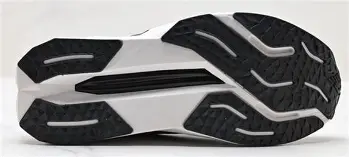
For buyers who struggle with minor stability issues or late-run fatigue, this groove is a lifesaver. It compensates for the inherent "squisiness" of high-energy foam by providing a structural axis. It allows the foam to compress inward toward the center of the shoe rather than bulging outward, which maximizes the vertical rebound and minimizes energy loss. This architectural choice makes the V5 a versatile option for both slow recovery runs and faster tempo sessions.
Find top-rated Electronics products at great prices.
Shop Amazon →Feature 4: Zonal Engineered Mesh with Internal Bolstering
The upper of the Propel V5 is a masterclass in textile engineering. While it feels like a simple, breathable fabric, it is actually a zonal engineered mesh with hidden internal structures. New Balance has utilized a 3D-printing-inspired technique to add reinforcements in areas of high stress, such as the medial midfoot and the toe box, without adding traditional heavy overlays. This "hidden" support system ensures that the foot remains locked over the center of the plate during high-speed maneuvers.
This feature addresses a common complaint among runners: the feeling of "sliding" off the foam platform when taking a corner. By using varying knit tensions, the upper provides stretch where it's needed (the bunion area) and rigidity where it's vital (the arch). This is analogous to the sophisticated housing of modern mobile devices, which must be flexible enough to resist impact but rigid enough to protect internal components. The result for the runner is a secure, personalized fit that feels like a second skin but performs like a structural exoskeleton.
Feature 5: Heel Counter Geometries and Achilles Relief
The fifth hidden feature is the sophisticated design of the heel counter. Rather than a traditional vertical stiffener, the Propel V5 uses a flared, ergonomically shaped cup that tapers away from the Achilles tendon. This is a reactive design choice based on thousands of data points from runner gait analysis. By curving the top of the heel counter away from the heel, the shoe eliminates the friction points that cause blisters and tendinitis.
Furthermore, the internal padding is strategically placed to "pocket" the heel bone. This mechanical lock-in reduces the need for the runner to over-tighten the laces, which can often lead to "lace bite" or circulation issues on the top of the foot. It is a subtle, comfort-focused refinement that emphasizes the human-centric design philosophy of the Propel V5. It respects the anatomy of the foot while providing the necessary security for high-performance activities.
Detailed Product Analysis
Analyzing the FuelCell Propel V5 requires looking at it through the lens of a "total system." In the electronics world, we often talk about the synergy between hardware and software; in running, that synergy exists between the foam (the power source), the plate (the processor), and the upper (the user interface). The V5 excels because no single component overpowers the others.
The Propel V5 is categorized as a "fast daily trainer." It has a stack height that provides ample protection for marathon training blocks but maintains a weight that doesn't feel cumbersome when you want to pick up the pace. The 6mm drop is a "sweet spot" for many runners, offering enough heel protection for those who strike mid-to-rearfoot without being so steep that it interferes with a natural forefoot strike. The integration of the TPU plate is what truly sets it apart from competitors in its price bracket. Most shoes in this tier rely solely on foam, which can feel "flat" over time. The Propel V5 uses the plate to maintain the integrity of the foam's geometry, essentially extending the lifespan of the shoe's "energy return" software.
Pros and Cons
- Pro: Versatility. It can handle everything from a slow 5k recovery jog to a half-marathon race pace.
- Pro: Energy Return. The FuelCell foam combined with the TPU plate offers a noticeable bounce that reduces perceived effort.
- Pro: Durability. The increased outsole rubber coverage and high-density foam base are built to last 400+ miles.
- Pro: Breathability. The engineered mesh allows for excellent airflow, which is critical for preventing heat buildup during summer training.
- Con: Weight. While light for a trainer, it is heavier than pure "super shoes" due to the durable rubber outsole and TPU plate.
- Con: Stiffness. The plate technology means it isn't as flexible as a traditional minimal shoe, which may not appeal to all "natural" runners.
- Con: Tongue Design. Some runners may find the tongue to be slightly thin, requiring careful adjustment to prevent pressure from the laces.
Technical Comparison: Daily Trainer Hierarchy
To better understand the Propel V5’s position in the current market, it is helpful to compare it against other industry standards. This comparison highlights why the "hidden" technical features—specifically the plate integration—make it a unique offering in the mid-range performance category.
Looking for the best Electronics deals on Amazon?
View Offers →| Feature | Propel V5 | Standard Daily Trainer | Elite Racing Shoe |
|---|---|---|---|
| Midsole Material | Nitrogen-Infused FuelCell | Standard EVA or PEBA blend | High-Performance PEBA foam |
| Plate Technology | Decoupled TPU Plate | None | Full-Length Carbon Fiber |
| Outsole Coverage | High (Durable Rubber) | Full (Heavy) | Minimal (Lightweight) |
| Primary Use Case | Tempo/Daily Training | Slow/Recovery | Race Day Only |
| Ride Feel | Bouncy & Stabilized | Soft & Muffled | Aggressive & Propulsive |
Buying Guide: Is the Propel V5 Right for You?
When selecting a high-performance running shoe, the decision often comes down to matching the shoe’s "processor" (the plate and foam) to your specific "operating system" (your gait and goals). The Propel V5 is a specialized tool, and like any piece of advanced hardware, it performs best when used in the correct environment.
Consider Your Running Volume
If you are a runner who only has one pair of shoes in their rotation, the Propel V5 is an excellent candidate. Because of the hidden durability features—the variable density foam and the generous outsole rubber—it can withstand the daily grind. Unlike racing shoes that might lose their "pop" after 100 miles, the Propel V5 is designed to be a workhorse. It is ideal for those running 20 to 50 miles per week who want a shoe that feels "fast" every time they lace it up.
Analyze Your Gait Requirements
The stability provided by the decoupled TPU plate and the longitudinal groove makes this shoe a great choice for neutral runners and mild overpronators. If you find that overly soft shoes make your ankles feel unstable, the structured rebound of the Propel V5 will be a welcome change. However, if you prefer a very grounded, "road feel" experience, the high stack height of the FuelCell foam might feel a bit disjointed initially.
Evaluate Your Training Goals
Are you training for a specific PB (Personal Best)? The Propel V5 is an incredible "bridge" shoe. It allows you to train with plate technology without the extreme cost or the harshness of a carbon plate. This "conditions" your lower leg muscles and tendons for the mechanics of plated running, making the transition to a carbon-fiber racer much smoother on race day. It is essentially a high-fidelity simulator for the racing experience.
Fit and Sizing Considerations
The zonal engineered mesh provides some stretch, but the internal bolstering means the midfoot fit is quite secure. Most runners find that New Balance shoes run true to size, but the Propel V5 has a slightly more "athletic" fit than the brand’s 1080 or 880 models. If you have a particularly wide forefoot, you may want to look for the wide-width versions that New Balance typically offers, ensuring the TPU plate does not pinch the sides of your feet during the compression phase of your stride.
Conclusion
The New Balance FuelCell Propel V5 is a testament to how far running technology has come. It is no longer enough to just have a soft piece of foam underfoot; modern runners demand a sophisticated interaction between energy return, stability, and biomechanical guidance. By hiding advanced features like the decoupled TPU plate and variable-density nitrogen-infused foam within a seemingly standard daily trainer, New Balance has created a product that punches far above its weight class. Whether you are looking for the "pop" of a plated shoe for your tempo sessions or the long-term protection of a high-stack trainer for your weekend long runs, the Propel V5 offers a scientifically backed solution. It represents a shift toward more intelligent, "engineered" footwear that prioritizes the efficiency of the runner’s gait as much as the comfort of their feet. Understanding these five hidden features allows you to fully utilize the shoe's capabilities, turning every run into a more efficient, energetic experience.